Lorenz Advanced Research
Applied research & consulting in physical modelling, machine learning, atmospheric science, and advanced computing.
Physicist · Data Scientist · Applied Researcher
I am a physicist and applied researcher leading advanced computing work at Selkirk Innovates while pursuing a doctorate in plasma physics. My work spans atmospheric science, machine learning, hardware instrumentation, and high-performance computing, grounded in first-principles thinking.
Lorenz Advanced Research is named for Edward Lorenz, whose work on nonlinear dynamical systems showed that small differences in initial conditions can produce very different outcomes. That idea shapes how I approach problems: model the system carefully, choose the right abstraction, and build something robust. Through this practice, I take on independent contracts at the intersection of science, computation, and industry.
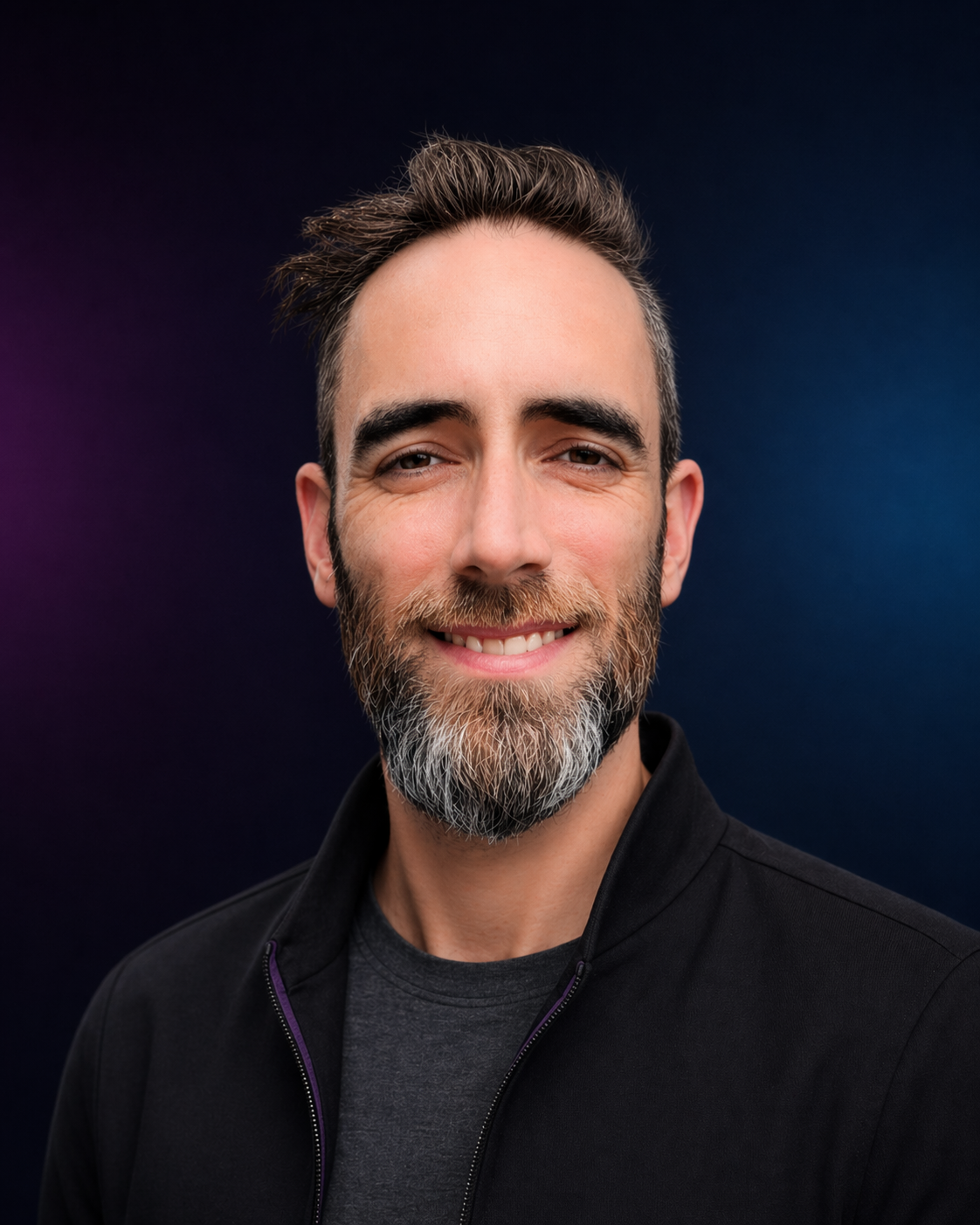
A career spanning academia, government research, and applied industry work. The common thread is a physicist's discipline: start from first principles, choose the right model, and deliver results that hold up.
From atmospheric microphysics to plasma dynamics, I develop models built on underlying physics, not just fitted to data. I use process-based, stochastic, and dynamical approaches for complex real-world systems.
Production-grade ML systems across a wide range of domains and data types, including computer vision, time-series, NLP, and graph-structured data. Strong emphasis on interpretability and physical consistency.
Deep domain expertise in climate analysis, numerical weather prediction, and remote sensing. Experienced deploying climate tools for government and industry decision-making.
Research-grade software built for production: open-source libraries, data pipelines, interactive tools, and deployed web applications. Comfortable across the full stack.
Custom sensor systems, embedded hardware, and remotely operated instrumentation, from initial design through field deployment and ongoing operation in demanding environments.
Large-scale computation on national HPC infrastructure, including cluster deployment, parallel job management, and scalable data workflows for research and operational use.
A selection of applied research and consulting engagements across industry, academia, and government, spanning environmental monitoring, industrial automation, climate adaptation, and atmospheric science.
Developed LCAP, a framework for projecting localized climate indicators across multiple future scenarios. Built to support municipal and organizational decision-making, the tool handles data acquisition, regional downscaling, statistical analysis, and deployment on national HPC infrastructure. Now in active use by municipalities and industry partners across Canada.
Developed a real-time machine vision system that determines lumber end-grain orientation on a production assembly line and signals a PLC to correct board alignment automatically. The project combined machine learning, stochastic modelling, and industrial automation to improve throughput and reduce manual intervention.
Deployed and remotely operated an atmospheric lidar system at a High Arctic research station. Developed retrieval algorithms for water vapour and temperature profiling, published a case study of anomalous wintertime water vapour intrusions and their contribution to the Arctic radiative balance, and co-authored characterization of a new multi-wavelength lidar instrument. Published in Geophysical Research Letters and Atmospheric Measurement Techniques.
Designed and delivered two concurrent real-time monitoring systems for industrial operations: an air quality anomaly detector integrating existing sensor networks and camera feeds, and an acoustic monitoring system using machine learning to identify and locate noise violations near a facility and adjacent community. Both systems improved regulatory compliance and reduced response time to environmental events.
Research and development of a prototype board identification and grading system for an engineered stud manufacturer. The system combined machine learning, photogrammetry, and 3D LiDAR to classify and grade offcuts automatically on the production line, reducing manual labour and improving process consistency.
Worked with Environment and Climate Change Canada and McGill University to develop a computationally efficient approach to high-resolution ensemble weather prediction. Built an open-source data conversion library adopted by ECCC staff, and designed and executed a rigorous multi-dimensional statistical verification framework using large-scale observational and forecast datasets from a Pacific Northwest field campaign.
If you have a problem that sits at the edge of what standard tools can solve, something that needs rigorous modelling, domain depth, or a team that can move from research to delivery, get in touch.
jonathan.g.doyle@gmail.com